How to Plan Roof Retrofits on a Budget: Expert Guide
Building envelopes endure relentless environmental pressures, absorbing thermal radiation, cyclic wind loading, and daily precipitation patterns over decades. As protective assemblies degrade, structural managers face a critical juncture: complete demolition and replacement versus a carefully engineered system retrofit. However, pursuing structural renewal under tight financial constraints introduces immense operational tension. Choosing the cheapest path or rushing preliminary evaluations frequently compromises building safety, accelerates material degradation, and triggers severe cost overruns down the line.
Navigating this financial landscape requires moving past reactive maintenance and simplistic contractor bids toward structured capital allocation. Understanding how to plan roof retrofits on a budget demands comprehensive mapping of existing conditions, rigorous life-cycle material analysis, and disciplined contingency planning. Rather than viewing capital outlays as isolated expenses, sophisticated property operators treat envelope retrofits as calculated investments in thermal efficiency and structural longevity.
Balancing capital preservation with technical durability necessitates examining structural load limits, material compatibility, and execution timing. The following sections dissect the systemic variables, conceptual frameworks, and analytical methodologies required to optimize roof renovation expenditures without sacrificing structural integrity or long-term weatherproofing standards.
Understanding “how to plan roof retrofits on a budget”
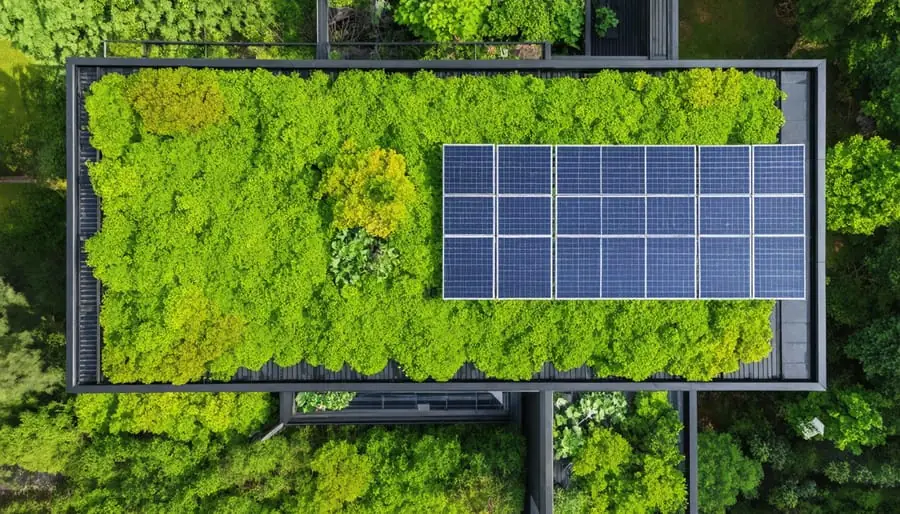
At its core, how to plan roof retrofits on a budget involves distinguishing between superficial cosmetic savings and foundational structural integrity. A pervasive miscalculation assumes that a restricted budget dictates choosing the lowest-cost material or omitting diagnostic core cuts. In practice, bypassing thorough preliminary inspections hides catastrophic substrate failures—such as structural wood rot, insulation saturation, or deck corrosion—beneath a fresh layer of membrane, transforming a manageable fix into an extensive structural rehabilitation.
Another common pitfall treats roof retrofitting as a uniform plug-and-play exercise. Budget efficiency actually requires a rigorous evaluation of underlying support assemblies, drainage slopes, and thermal performance metrics. Overlooking these systemic elements to minimize upfront material costs frequently causes secondary failures, such as chronic ponding water, accelerated fastener corrosion, or code compliance violations that demand premature intervention.
Mastering this discipline requires analyzing total life-cycle expenses rather than initial contract quotes. By evaluating how labor variances, alternative membrane assemblies, and execution windows impact financial outlays over a twenty-year horizon, operators can maintain stringent fiscal control while upholding strict technical performance standards.
Deep Contextual Background and Systemic Evolution
Historically, building envelope maintenance relied on empirical methods. Craftsmen repaired localized leaks reactively using heavy mineral aggregates, organic felts, and pitch applied via rudimentary techniques. These vernacular approaches lacked structural load planning, resulting in heavy, cumulative dead-load increases that strained underlying framing and necessitated frequent, disruptive maintenance cycles.
The mid-twentieth century catalyzed a technical transformation with the introduction of polymer-modified bitumens, single-ply thermoplastic membranes, and spray-applied polyurethane foam systems. These lightweight materials altered structural requirements, enabling large-span flat roof geometries. However, the complexity of multi-layered thermal and waterproofing physics meant that improper installation led to trapped moisture vapor, blistering, and premature membrane delamination. Consequently, building codes evolved to mandate rigorous thermal calculations, wind-uplift resistance testing, and standardized fastener densities.
In the contemporary economic climate, supply chain volatility and tightening municipal energy codes add further complexity to capital expenditure planning. Property managers can no longer rely on static cost estimations from past decades. This systemic evolution underscores why mastering adaptive, data-driven budgeting strategies remains an essential competency for long-term real estate asset management.
Conceptual Frameworks and Mental Models
1. The Risk-Stratified Capital Model
This framework segregates project capital into three strict pools: baseline material acquisition, skilled labor execution, and a non-negotiable contingency fund dedicated exclusively to concealed structural anomalies discovered during stripping.
2. Life-Cycle Cost Parity
This model evaluates materials by dividing total acquisition and installation cost by expected service lifespan. It demonstrates how investing slightly more in a durable single-ply membrane yields lower annualized costs than frequent patching of budget-grade alternatives.
3. The Minimalist Structural Intervention Principle
Prioritizing restorative interventions—such as liquid-applied coatings or overlay systems—over total tear-off procedures, provided that non-destructive testing confirms the underlying structural deck remains dry and structurally sound.
Key Categories and Variations of Budgetary Strategies
Structuring a cost-effective building envelope renewal involves distinct technical pathways, each carrying specific risk profiles, labor demands, and capital impacts.
-
Recover/Overlay Systems: Installing a compatible new membrane directly over an existing well-adhered roof system. This eliminates costly demolition and landfill tipping fees, but requires absolute verification of dry insulation layers.
-
Targeted Partial Section Retrofits: Isolating remediation to chronically failing quadrants rather than replacing an entire expansive roof footprint. This preserves short-term cash flow, but requires meticulous flashing details at transition zones.
-
Value-Engineered Material Specification: Selecting standard-grade elastomeric membranes or mechanically fastened systems that balance initial capital outlay against expected weathering resistance.
-
Off-Peak Execution Scheduling: Contracting installation work during shoulder seasons when roofing contractors experience lower demand, facilitating labor rate negotiation.
-
Precision Waste Optimization: Conducting exact laser measurements of roof geometry prior to procurement to minimize material scrap percentages.
-
Energy Rebate Integration: Incorporating cool-roof reflective coatings or insulation upgrades that qualify for municipal utility incentives or tax credits, effectively offsetting project costs.
-
Integrated Multi-Trade Contracting: Bundling structural deck repair, drainage correction, and membrane installation under a single negotiated scope of work to reduce general contractor overhead markups.
Comparative Evaluation of Budgetary Strategies
| Strategy | Implementation Complexity | Upfront Capital Impact | Long-Term Risk Profile | Average Service Horizon |
| Membrane Recover (Overlay) | Low to Moderate | Moderate | Moderate (Hidden moisture) | 10 to 15 Years |
| Complete Tear-Off & Replacement | High | High | Low | 25 to 35 Years |
| Partial Quadrant Phasing | Moderate | Low to Moderate | Moderate-High | Variable |
| Liquid-Applied Restoration Coating | Low | Low | Low-Moderate | 10 to 20 Years |
Realistic Decision Logic
Selecting an appropriate financial and technical pathway requires reconciling facility operational constraints with structural reality. For a stable commercial warehouse where core cuts verify that existing insulation is entirely dry and the steel deck is free of corrosion, executing a membrane overlay represents the most logical capital choice. Conversely, if diagnostic testing reveals saturated insulation across multiple quadrants and active deck rusting, selecting a low-cost overlay guarantees catastrophic failure; a complete tear-off is the only viable engineering response.
Detailed Real-World Scenarios
Scenario A: The Industrial Warehouse with Tight Capital Reserves
A logistics facility manager faces widespread minor leaking across a 50,000-square-foot EPDM roof while operating under strict corporate budgetary caps.
-
Constraints: Minimal cash reserve, continuous 24/7 warehouse operations, aging mechanical equipment curbs.
-
Decision Points: Execute a complete tear-off with structural insulation upgrades versus applying a high-solids silicone roof coating system over the existing cleaned membrane.
-
Failure Modes: Selecting a full tear-off triggers severe business interruption costs and exhausts available capital, leaving no funds for unforeseen mechanical relocation.
-
Second-Order Effects: The choice of a silicone restoration coating extends service life by fifteen years within budget limits, preserving operational capital for core logistics investments.
Scenario B: The Mid-Rise Multi-Family Residential Roof
The owners of an aging residential building must address chronic interior leaks originating from a deteriorated modified bitumen roof assembly.
-
Constraints: Fixed tenant reserve funds, strict municipal noise and parking ordinances, impending rainy season.
-
Decision Points: Levy a heavy special assessment for immediate total replacement versus phasing a multi-year recovery membrane program.
-
Failure Modes: Phasing the project improperly without temporary water-tight seals leads to severe interior water damage during mid-construction storms.
-
Second-Order Effects: Costly tenant liability claims, emergency litigation expenses, and a fractured relationship between property management and residents.
Planning, Cost, and Resource Dynamics
Financial control in building envelope projects requires rigorous separation of direct and indirect cost drivers. Direct costs encompass raw materials, specialized installation machinery rentals, direct labor wages, and municipal permit fees. Indirect costs frequently destabilize budgets if ignored; these include interior asset protection during construction, temporary relocation expenses, crane staging logistics, and contractor overhead markups.
Opportunity costs also govern decision-making. Allocating all available capital reserves to a premium roof aesthetic diverts emergency funds from critical mechanical or electrical infrastructure. Establishing realistic range-based budgeting provides the operational agility required to absorb market fluctuations.
Range-Based Project Cost Matrix
| Expense Category | Typical Scope | Cost Range (USD) | Primary Variance Drivers |
| Infrared Thermal Imaging Survey | Diagnostic moisture mapping | $1,500 – $4,500 | Roof square footage, roof layout complexity |
| Core Cut Sampling & Lab Analysis | Deck and insulation verification | $800 – $2,500 | Number of samples, structural composition |
| Complete Tear-Off & Disposal | Removal of failed systems | $2.00 – $5.00 per sq ft | Number of layers, local tipping fees |
| Single-Ply Membrane Installation (TPO/PVC) | Standard mechanically fastened | $4.50 – $9.50 per sq ft | Material thickness, insulation R-value |
| Liquid-Applied Restoration Coating | Silicone or acrylic application | $2.50 – $6.00 per sq ft | Surface preparation needs, coating mil thickness |
| Project Contingency Reserve | Unforeseen structural repairs | 10% – 20% of total budget | Building age, historical maintenance records |
Tools, Strategies, and Support Systems
Executing budget-conscious envelope renovations relies on leveraging specialized diagnostic instruments, digital modeling platforms, and experienced professional networks.
-
Infrared Thermography Cameras: Non-destructive imaging tools used to map subsurface moisture migration within insulation panels prior to final scope definition.
-
Roof Core Samplers: Cylindrical cutting tools designed to extract physical cross-sections of the roof assembly to verify membrane thickness and deck composition.
-
Digital Takeoff and Estimating Software: Precision CAD programs utilized to calculate exact roof perimeters, penetrations, and material quantities to eliminate waste.
-
Independent Roof Consultants (RRC): Professional envelope specialists who provide unbiased technical oversight without material sales biases.
-
Manufacturer Certified Installers: Contractors approved to issue comprehensive NDL (No Dollar Limit) material and labor warranties.
-
Wind-Uplift Calculators: Engineering software used to determine exact fastening patterns required to withstand local severe weather forces.
-
Electronic Leak Detection (ELD) Equipment: High-voltage or low-voltage testing systems used to verify membrane integrity post-installation.
Risk Landscape and Failure Modes
Operating under strict financial constraints amplifies structural risks, turning minor oversight into major operational hazards.
The primary physical risk is compounding moisture entrapment. Applying a vapor-impermeable membrane over wet insulation seals residual moisture inside the assembly. Under solar heating, this trapped water turns into vapor pressure, blistering the new membrane and degrading the structural deck from above.
Another compounding hazard involves wind-uplift vulnerability. Cutting corners on mechanical fastening densities or edge-metal anchoring to save labor costs creates a weak point. High wind events exploit these deficiencies, peeling back sections of the newly installed roof and causing progressive structural damage.
Governance, Maintenance, and Long-Term Adaptation
Preserving the financial integrity of a budget-planned roof retrofit requires formal operational governance and structured post-installation oversight.
Operational Review Cycles
-
Post-Installation Warranty Inspection: A mandatory joint review conducted with the contractor and manufacturer within twelve months of completion.
-
Semi-Annual Maintenance Walks: Comprehensive visual walkthroughs performed every spring and autumn to clear debris and inspect flashing seals.
-
Triennial Thermal Scans: Periodic moisture scans to ensure no localized membrane punctures have allowed water intrusion over time.
-
Decennial Structural Audit: A comprehensive engineering review assessing overall building movement, drainage efficiency, and coating degradation.
Layered Maintenance Checklist
-
Clear all internal drains, scuppers, and perimeter gutters of leaves, sediment, and biological growth.
-
Inspect elastomeric sealant joints at equipment curbs, expansion joints, and penetration flashings for cracking.
-
Verify that lightning protection cables and conduit supports rest securely on protective pads rather than directly on the membrane.
-
Prohibit unauthorized contractor traffic across delicate single-ply surfaces without designated walk pads.
Measurement, Tracking, and Evaluation
A disciplined budgetary program relies on balancing lagging metrics against leading indicators to gauge long-term performance.
Lagging indicators track historical failures after they occur: interior water stain counts, emergency repair invoice totals, and tenant leak complaints. Relying exclusively on these signals means financial damage has already materialized.
Leading indicators predict asset health and prevent premature degradation: moisture meter baseline logs, annual inspection compliance scores, and drainage slope verification reports.
Documentation and Tracking Examples
-
Project Baseline Dossier: A centralized digital repository containing initial core-cut reports, thermal images, and approved engineering drawings.
-
Financial Variance Register: A real-time tracking ledger comparing budgeted line items against actual invoices and contingency drawdowns.
-
Warranty and Maintenance Log: A structured record cataloging contractor service visits, material batch numbers, and periodic inspection sign-offs.
Common Misconceptions and Oversimplifications
-
Myth: Selecting the lowest contractor bid is the single most effective way how to plan roof retrofits on a budget.
-
Correction: Low initial bids frequently omit critical scope items, rely on inferior material grades, or lead to steep change-order disputes later.
-
-
Myth: A roof recover system can always be installed over any number of existing failed layers without structural engineering review.
-
Correction: Exceeding maximum allowable dead-load weight limits or trapping wet insulation beneath an overlay compromises structural framing integrity.
-
-
Myth: Comprehensive diagnostic testing like infrared scans and core cuts represents an unnecessary upfront expense that should be cut.
-
Correction: Skipping diagnostics prevents accurate scoping, frequently resulting in unexpected structural repairs that dwarf the cost of initial testing.
-
-
Myth: Once a roof retrofit is completed under budget, no further maintenance is required for at least a decade.
-
Correction: Regular clearing of drainage paths and flashing upkeep are mandatory to preserve warranty validity and prevent premature failure.
-
-
Myth: All single-ply membranes perform identically regardless of thickness or reinforcement scrim quality.
-
Correction: Membrane durability varies drastically based on mil thickness, polymer formulation, and ultraviolet resistance characteristics.
-
-
Myth: Weather conditions during installation have a negligible impact on long-term adhesive curing and membrane bonding.
-
Correction: Applying adhesives outside manufacturer-specified temperature and humidity ranges causes catastrophic delamination.
-
Ethical and Contextual Considerations
Balancing tight financial parameters with structural preservation carries ethical responsibilities. Property managers and facility planners hold a duty of care to occupants, ensuring that cost-saving measures never compromise life safety, fire ratings, or structural load capacity. Transparent communication with stakeholders regarding the trade-offs of recovery systems versus total replacements maintains institutional trust and prevents short-sighted risk transference.
Conclusion
Mastering how to plan roof retrofits on a budget requires disciplined engineering analysis, realistic financial modeling, and uncompromising attention to diagnostic detail. True economy is never achieved through reckless cost-cutting or the omission of fundamental structural evaluations. Instead, sustainable budget management relies on aligning technical realities with strategic capital allocation. By prioritizing targeted non-destructive testing, selecting appropriate restoration pathways, and maintaining rigorous post-installation governance, property operators can secure long-term envelope reliability without financial distress.