How to Reduce Waterproofing Expenses: Expert Financial Guide
Moisture infiltration remains a persistent and destructive threat to architectural longevity. While concrete, steel, and masonry provide the structural skeleton of modern buildings, the waterproofing envelope acts as its physiological defense system. Therefore, it repels hydrostatic pressure, vapor drive, and rainwater runoff. When this defensive barrier fails, moisture migrates through capillary action and gravity. Consequently, it rots timber framing, corrodes internal reinforcing steel, and fosters toxic mold colonies. Property owners must allocate substantial capital budgets toward initial waterproofing installations and subsequent remediation projects over a building’s lifecycle.
The economic challenge of managing moisture protection involves balancing high upfront capital expenditures with uncertain long-term performance. Architectural designs frequently incorporate complex geometries, subterranean basements, and podium decks. As a result, these features complicate membrane detailing. When developers approach moisture protection through short-term cost-cutting measures—such as selecting inferior membrane thicknesses—they frequently trigger catastrophic leaks. These leaks ultimately demand expensive structural tear-outs. Addressing these financial vulnerabilities requires moving past superficial budgeting to embrace a holistic philosophy of risk-adjusted capital allocation.
Achieving sustainable financial efficiency requires shifting the management paradigm from reactive leak patching to proactive envelope engineering. This involves understanding how substrate preparation dictates membrane adhesion, and how hydrostatic head pressures vary across seasonal water tables. Additionally, it requires recognizing how redundant drainage paths reduce reliance on a single layer of defense. The following analysis explores the financial mechanics of building envelopes. Specifically, it dissects the failure modes, engineering principles, and operational strategies necessary to preserve structural integrity while controlling capital expenditures.
Understanding “how to reduce waterproofing expenses”
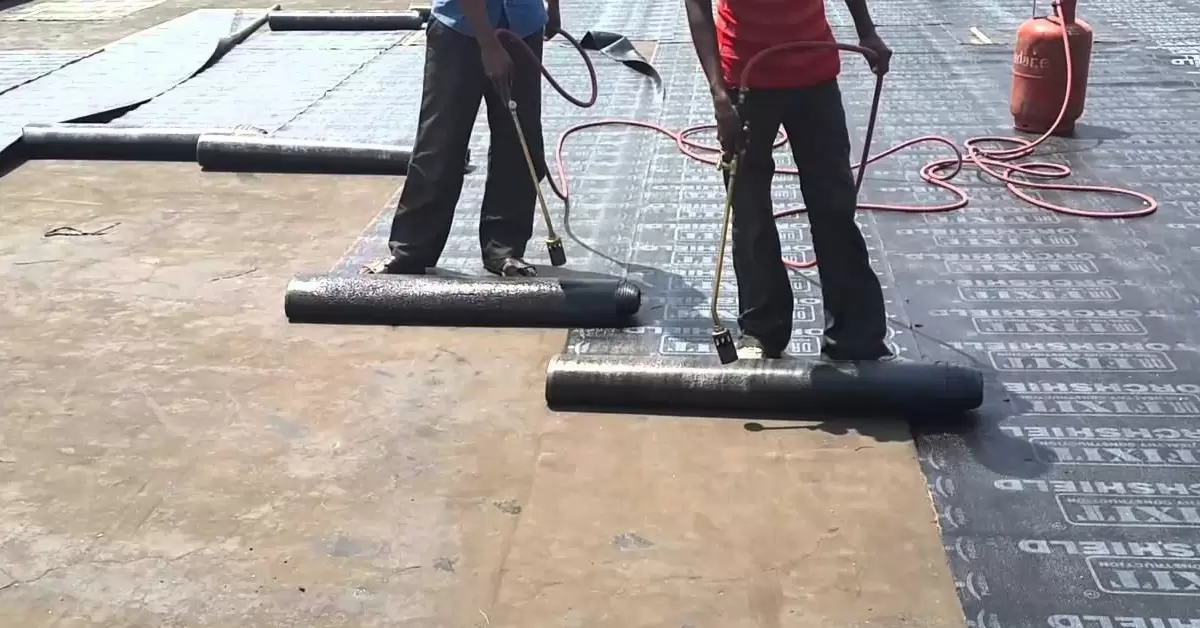
The foundational principles of how to reduce waterproofing expenses extend far beyond negotiating cheaper material bids. At its core, financial optimization in moisture protection requires understanding that true long-term savings derive from minimizing lifecycle intervention frequency. A common misunderstanding assumes that purchasing budget-grade sheet membranes saves money. In practice, however, the labor-intensive nature of tear-outs means that a failed low-cost installation costs five to ten times the original budget within a decade.
Oversimplification poses the greatest risk when attempting to trim project budgets. Contractors and developers often focus exclusively on the raw cost per square foot of waterproofing products. Consequently, they ignore site-specific variables such as soil chemistry, hydrostatic head pressure, and structural deflection rates. For instance, choosing an unreinforced fluid-applied membrane to save upfront material costs invites membrane rupture when concrete shrinkage cracks open beneath the assembly. Furthermore, treating waterproofing as an isolated sub-contractor task invites coordination errors that require expensive field modifications.
True mastery of this subject demands examining the interplay between upfront engineering rigor, material durability, and post-installation monitoring. Waterproofing expenses do not decrease through neglect or deferred maintenance. Instead, they diminish through precise detailing, rigorous substrate preparation, and strategic redundancy where failure would result in exorbitant damage. Recognizing these complex financial dynamics transforms waterproofing budget management from an arbitrary cost-cutting exercise into a disciplined methodology focused on total cost of ownership.
Deep Contextual Background and Systemic Evolution
The history of waterproofing spans from ancient Mesopotamian bitumen applications and Roman hydraulic cements to modern polymer chemistry. Historically, builders relied on natural asphalt, clay cores, and massive masonry thickness to keep water at bay. These vernacular methods depended on mass and gravity. Furthermore, they required thick structural vaults and extensive excavation to manage subterranean moisture.
In the mid-to-twentieth century, the petrochemical industry introduced synthetic rubber, polyvinyl chloride (PVC), and modified bitumen sheets. These advancements revolutionized below-grade and roof waterproofing by providing flexible, high-tensile membranes. However, the rapid commercialization of these synthetic products frequently outpaced installer training. As a result, it led to widespread application errors, poor substrate adhesion, and complicated detailing around structural penetrations.
Despite technological advancements in waterproofing chemistry, financial losses related to water infiltration remain remarkably consistent across global construction markets. The transition from simple low-rise structures to complex multi-story subterranean basements introduced intricate multi-trade coordination requirements. Understanding this historical trajectory highlights why contemporary cost reduction requires rigorous multi-disciplinary collaboration between structural engineers, waterproofing consultants, and specialized installation contractors.
Conceptual Frameworks and Mental Models
1. The Lifecycle Cost-to-Risk Ratio
This mental model evaluates waterproofing expenditures over a thirty-to-fifty-year horizon rather than focusing solely on initial construction budgets. It posits that a higher initial investment in premium materials yields an exponentially lower cumulative expenditure. Consequently, it prevents catastrophic sub-grade remediation.
2. The Hydrostatic Pressure Hierarchy
Water acts as a fluid under constant gravitational and hydraulic pressure. This framework dictates that financial resources should be allocated proportionally to the severity of water exposure. Therefore, projects should allocate robust systems to high-water-table subterranean zones while utilizing simpler assemblies for low-risk above-grade applications.
3. The Substrate Foundation Baseline
The performance of any waterproofing membrane depends entirely on the quality of the underlying substrate. This model views concrete curing, surface profile, and moisture content not as minor finishing details, but as primary structural determinants of whether a waterproofing investment succeeds.
4. The Redundancy Investment Matrix
This mental model weighs the cost of adding secondary defense lines against the potential cost of failure. It establishes that redundancy is financially justified only in critical, inaccessible locations where post-construction repair is economically prohibitive.
Key Categories or Variations of Financial Optimization
Optimizing and managing protection budgets involves distinct strategic categories. Each category presents unique financial trade-offs, installation complexities, and long-term risk profiles.
-
Value Engineering Substrate Specifications: Collaborating with structural engineers to optimize concrete mix designs. This reduces micro-cracking and lowers overall waterproofing demand. However, it requires strict curing controls.
-
Targeted Redundancy Allocation: Applying high-performance systems exclusively to critical sub-grade elevator pits while using standard single-ply membranes in less critical areas. This balances cost across the project.
-
Pre-Applied Bentonite Clay Systems: Utilizing sodium bentonite panels that swell upon contact with moisture beneath foundation slabs. This reduces labor installation time. However, it fails if premature wetting occurs before concrete placement.
-
Liquid-Applied Reinforced Membranes: Employing seamless fluid-applied polyurethane systems embedded with reinforcing fabric. This eliminates lap seams entirely. Nevertheless, it demands strict wet-film thickness verification.
-
Positive-Side vs. Negative-Side Waterproofing Strategy: Prioritizing exterior waterproofing during initial construction to prevent water from entering the structural wall. Consequently, this avoids expensive negative-side interior injections later.
-
Integrated Drainage Composite Mats: Installing prefabricated geocomposite drainage sheets to channel hydrostatic water away from foundation walls rapidly. This reduces prolonged hydrostatic head pressure on the primary membrane.
-
Comprehensive Quality Assurance Programs: Hiring independent third-party testing agencies to perform electronic leak detection during installation. This increases upfront soft costs. However, it virtually eliminates catastrophic post-occupancy warranty claims.
-
Phased Procurement and Material Locking: Purchasing bulk waterproofing materials early in the construction cycle to hedge against inflation. This protects project margins. However, it requires secure on-site storage.
Comparative Evaluation of Financial Optimization Strategies
| Optimization Strategy | Primary Cost Driver | Implementation Complexity | Upfront Capital Impact | Lifecycle Savings Potential |
| Substrate Concrete Optimization | Admixtures / Curing Controls | Moderate | Low to Moderate | Moderate |
| Targeted Redundancy Allocation | Material Grade Differentiation | Low | Moderate | High |
| Pre-Applied Bentonite Panels | Specialized Waterproofing Material | Moderate | Moderate | High |
| Reinforced Liquid Membranes | Labor Precision / Primer Quality | High | Moderate to High | High |
| Positive-Side Prioritization | Excavation / Formwork Access | High | High | Extreme |
| Geocomposite Drainage Mats | Drainage Core Material | Low | Low | Moderate |
| Third-Party QA Inspection | Professional Consulting Fees | Low | Low to Moderate | Extreme |
Realistic Decision Logic
Selecting appropriate financial optimization strategies requires reconciling site-specific hydrogeological conditions with building requirements. For a suburban office building situated on well-draining sandy soil, investing in extensive multi-ply positive-side membranes combined with basic geocomposite drainage is financially sufficient. Conversely, for a dense urban high-rise featuring a subterranean parking garage sitting below the water table, cutting corners on waterproofing is economically disastrous. Here, prioritizing heavy-duty bentonite and rigorous third-party electronic leak detection represents the only fiscally sound approach.
Detailed Real-World Scenarios
Scenario A: The Commercial Subterranean Retail Center
A developer constructs a large retail basement complex in a coastal city prone to seasonal high water tables, initially selecting a low-cost damp-proofing paint to minimize upfront expenses.
-
Constraints: Tight construction loan budget, aggressive project timeline, high hydrostatic soil pressure.
-
Decision Points: Stick with the low-cost coating, or upgrade to a reinforced multi-ply sheet membrane with integrated drainage composites.
-
Failure Modes: Within six months of completion, rising hydrostatic pressure overcomes the thin coating, forcing water through hairline foundation cracks.
-
Second-Order Effects: Extensive interior fit-out destruction occurs. Consequently, emergency dewatering pump installations and costly tenant litigation follow.
Scenario B: The Residential Podium Deck
A multi-family residential developer installs an expensive fluid-applied waterproofing membrane on a concrete podium deck but omits protection boards before landscape contractors drop heavy planters.
-
Constraints: Fast-track scheduling, overlapping work crews, strict aesthetic project guidelines.
-
Decision Points: Permit landscape installation directly over the exposed membrane to save time, or enforce mandatory protection mat installation.
-
Failure Modes: Landscape workers drop heavy steel tools and sharp pavers directly onto the unprotected membrane, puncturing the waterproofing layer.
-
Second-Order Effects: Water migrates laterally beneath the membrane, eventually leaking into the parking garage below. Therefore, crews must demolish the expensive landscaping to patch the punctures.
Scenario C: The Industrial Warehouse
An industrial warehouse project applies a high-performance moisture-cured polyurethane waterproofing coating to a newly poured concrete floor slab after only seven days of curing.
-
Constraints: Fixed lease commencement date, penalties for construction delays, high relative humidity.
-
Decision Points: Proceed with membrane application based on visual dryness, or wait for mandatory relative humidity internal slab moisture testing.
-
Failure Modes: Trapped moisture vapor within the uncured concrete exerts vapor drive pressure upward. As a result, it causes massive blistering and delamination of the polyurethane membrane.
-
Second-Order Effects: Total failure of the flooring system occurs. Furthermore, it triggers project delay penalties and a complete re-application of the waterproofing system.
Scenario D: The Historic Urban Renovation
A real estate investment group converts a 19th-century stone-foundation warehouse into luxury loft apartments, seeking to waterproof damp interior basement walls cost-effectively.
-
Constraints: Irregular rubble-stone wall construction, historic preservation restrictions, tight ceiling height limits.
-
Decision Points: Apply an interior negative-side cementitious coating directly to the stone walls, or install a dimpled cavity-drain membrane system.
-
Failure Modes: The interior cementitious coating traps hydrostatic pressure behind the porous stone walls. Consequently, the historic mortar disintegrates and forces mineral efflorescence through the finish coat.
-
Second-Order Effects: Chronic interior dampness, mold growth behind finishes, and structural weakening of the historic foundation occur.
Planning, Cost, and Resource Dynamics
Effective financial management of building envelopes requires balancing upfront capital investments against the staggering downstream liabilities of moisture remediation. Deferring or underfunding waterproofing during the design phase almost invariably triggers exponential financial penalties later.
Direct costs encompass engineering design fees, specialized waterproofing membranes, drainage composites, flashings, and certified installation labor. Indirect costs are frequently far higher, including business interruption, tenant relocation, structural corrosion repair, and inflated litigation expenses. Opportunity costs also play a critical role. For instance, allocating capital to robust envelope systems diverts funds from short-term aesthetic features. However, it protects core asset value and prevents catastrophic operational disruptions.
Financial Planning and Waterproofing Cost Ranges
| Expense Category | Typical Scope | Cost Range (USD) | Variance Drivers |
| Below-Grade Sheet Membrane Installation | Foundation walls and slabs | $3.50 – $9.00 per sq ft | Material type, depth, excavation access |
| Fluid-Applied Podium Deck Systems | Plaza decks and balconies | $6.00 – $15.00 per sq ft | Detailing complexity, reinforcing fabric |
| Bentonite Clay Waterproofing Panels | Sub-slab and blind-side walls | $4.00 – $8.50 per sq ft | Hydrostatic pressure, soil chemistry |
| Geocomposite Drainage Mat Retrofit | Foundation wall water management | $1.50 – $3.50 per sq ft | Wall height, backfill logistics |
| Professional QA & Electronic Leak Testing | Quality assurance validation | $0.50 – $1.50 per sq ft | Building footprint, testing methodology |
| Sub-Grade Remediation & Injection | Repairing failed below-grade leaks | $15,000 – $75,000+ | Extent of water migration, access difficulty |
Tools, Strategies, and Support Systems
Executing a cost-effective waterproofing program requires leveraging specialized physical tools, digital diagnostic platforms, and professional engineering networks.
-
Electronic Leak Detection (ELD) Systems: Vector mapping and high-voltage spark testing grids installed over membranes to locate microscopic punctures instantly before concrete overburden is poured.
-
Calcium Chloride and Relative Humidity Meters: Precision instruments used to measure concrete moisture vapor emission rates. Consequently, they prevent premature membrane application failures.
-
Infrared Thermal Imaging Cameras: Diagnostic tools used to detect subsurface moisture infiltration behind finished walls and beneath roofing assemblies non-destructively.
-
Wet-Film and Dry-Film Thickness Gauges: Mechanical combs and magnetic probes used by quality control inspectors to verify that liquid-applied membranes meet specified mil thicknesses.
-
Independent Waterproofing Consultants (RRC/RRO): Certified professionals specializing in envelope design review, specification writing, and on-site installation observation.
-
Hydrostatic Pressure Testing Rigs: Specialized chambers used to test vertical wall membrane assemblies against simulated maximum groundwater pressures.
-
Bentonite Swell-Test Kits: Laboratory and field kits used to verify the swelling index and free-swell capacity of sodium bentonite waterproofing panels.
-
BIM 3D Clash Detection Software: Digital modeling tools used to coordinate complex structural penetrations, drainage lines, and waterproofing flashings during the design phase.
Risk Landscape and Failure Modes
Waterproofing expense management operates within a complex risk landscape where minor mechanical oversights compound into catastrophic building envelope failures.
The primary structural risk is lateral water migration. When a waterproofing membrane suffers a localized puncture or seam failure, water enters the breach and travels horizontally between the membrane and the concrete substrate. Because the water emerges meters away from the actual breach, diagnostic efforts become extremely difficult and expensive.
A secondary systemic risk involves chemical incompatibility between adjacent building materials. For example, applying certain solvent-based waterproofing membranes over incompatible asphaltic flashings can cause plasticizer migration. As a result, it dissolves the membrane and destroys its waterproof integrity.
Finally, contractual and warranty risks present ongoing financial hazards. Relying on vague manufacturer warranties that exclude labor costs or consequential interior damage leaves property owners fully exposed when premature leaks develop.
Governance, Maintenance, and Long-Term Adaptation
Long-term financial control over waterproofing expenses requires formal governance protocols, scheduled maintenance cycles, and rigorous post-construction review procedures.
Operational Review Cycles
-
Post-Construction Warranty Inspection: A mandatory joint inspection conducted by the general contractor, manufacturer, and owner’s representative eleven months after completion.
-
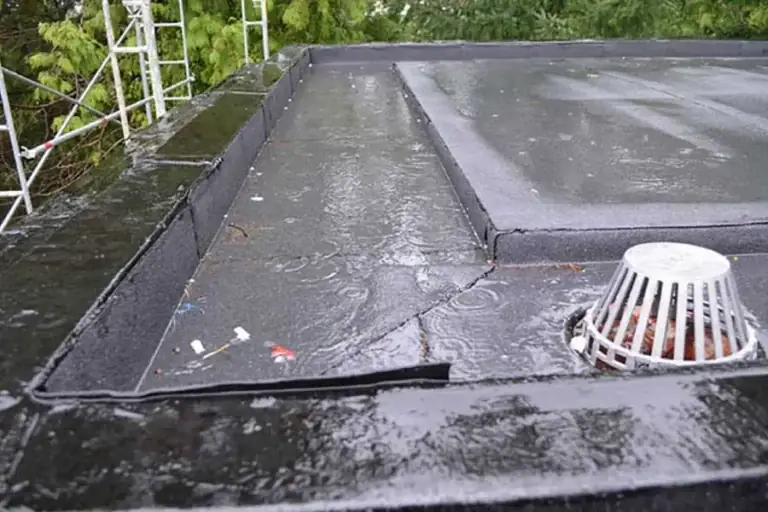
Semi-Annual Drainage and Scupper Clears: Comprehensive inspections every spring and autumn to clear roof drains, podium scuppers, and perimeter drainage channels of silt and debris.
-
Annual Expansion Joint and Sealant Checks: Checking exposed exterior sealants, wall expansion joints, and flashing terminations for weathering, cracking, or loss of elasticity.
-
Quinquennial Below-Grade Sump Audit: Professional inspection of sub-grade sump pumps, backflow preventers, and interior drainage channels every five years to ensure proper hydraulic discharge.
Layered Maintenance Checklist
-
Inspect all podium deck expansion joints and replace degraded elastomeric sealant ribbons.
-
Verify that surface drainage slopes around the building perimeter direct water away from foundation walls rather than toward them.
-
Check sub-grade sump pump operation, float switches, and battery backup systems monthly.
-
Monitor interior subterranean walls for early signs of efflorescence, dampness, or peeling paint.
-
Ensure that landscaping beds adjacent to foundation walls do not retain excessive moisture against building damp-proofing lines.
Measurement, Tracking, and Evaluation
A successful waterproofing budget management program relies on distinguishing between leading and lagging indicators to evaluate envelope performance.
Lagging indicators measure past failure costs: interior water intrusion insurance claims, tenant mold remediation invoices, structural concrete spalling repair costs, and emergency pump replacement fees. Relying solely on lagging indicators means the envelope has already failed, resulting in maximum financial loss.
Leading indicators predict financial stability and prevent failures before water intrusion occurs: adherence test pull results, electronic leak detection sign-off certificates, concrete moisture emission test compliance logs, and independent QA inspection pass rates.
Documentation and Tracking Examples
-
Waterproofing Quality Dossier: A permanent digital archive containing material batch numbers, applicator certifications, pre-pour inspection sign-offs, and electronic leak detection test maps.
-
Drainage and Maintenance Log: A structured register recording bi-annual drain cleaning dates, sump pump test cycles, and minor sealant replacement histories.
-
Envelope Warranty Register: A centralized tracking system documenting manufacturer warranty terms, expiration dates, and required annual maintenance compliance filings.
Common Misconceptions and Oversimplifications
-
Myth: Purchasing the cheapest sheet membrane or liquid coating is the most effective way to reduce overall project waterproofing expenses.
-
Correction: Inexpensive materials frequently lack tensile strength, leading to premature failure that incurs remediation costs exceeding initial material savings.
-
-
Myth: Concrete is inherently waterproof if poured thickly enough, making specialized membranes unnecessary for subterranean foundations.
-
Correction: Concrete is a porous material that shrinks and cracks as it cures. Therefore, without external waterproofing membranes, groundwater passes freely through micro-cracks.
-
-
Myth: Waterproofing inspection and quality assurance testing represent an unnecessary soft cost that can be safely eliminated to save money.
-
Correction: Independent QA testing catches installation defects while they are still easily accessible, preventing catastrophic post-construction leaks.
-
-
Myth: Positive-side and negative-side waterproofing offer equal financial and structural protection.
-
Correction: Positive-side waterproofing stops water at the exterior face before it enters the wall. Conversely, negative-side coatings trap moisture within the wall, accelerating corrosion.
-
-
Myth: Once a waterproofing system passes its initial water-flood test, it requires no further maintenance or monitoring throughout the building lifecycle.
-
Correction: Building movement and thermal expansion subject waterproofing assemblies to continuous physical stress. Consequently, they require scheduled inspections to catch wear early.
-
-
Myth: Standard manufacturer warranties cover all costs associated with waterproofing failure, including interior damage and labor removal.
-
Correction: Most standard warranties contain restrictive clauses that exclude labor, consequential interior damage, and substrate preparation failures.
-
-
Myth: Drainage mats and protection boards are optional accessories that can be omitted to reduce material and labor budgets.
-
Correction: Omitting protection boards guarantees membrane puncture. Furthermore, omitting drainage composites subjects the membrane to continuous unmanaged hydrostatic pressure.
-
Conclusion
The financial sustainability of any building envelope depends entirely on recognizing that waterproofing is a primary structural investment rather than a secondary cosmetic finish. Effectively managing and reducing lifetime waterproofing expenses requires moving past the illusion of short-term budget cuts. Instead, property owners must acknowledge that quality, redundancy, and rigorous installation oversight dictate long-term fiscal health. By prioritizing positive-side protection, enforcing rigorous substrate preparation, investing in independent quality assurance, and maintaining disciplined operational governance, property owners can safeguard their capital against the compounding devastation of water infiltration. Ultimate financial efficiency is achieved not through cheap initial procurement, but through patient, systematic engineering rigor where material science meets structural durability.