Luxury Urban Ecosystems USA: Design & Engineering Guide
Rapid urbanization across major North American metropolitan regions creates profound environmental, structural, and social disruptions. As concrete, steel, and asphalt replace porous natural landscapes, cities face rising urban heat island intensities, severe stormwater runoff surges, and degraded local biodiversity. Addressing these structural challenges requires looking far beyond conventional cosmetic landscaping or isolated green building accessories. Designing resilient, high-performance metropolitan environments demands an integrated ecological approach that treats buildings, open spaces, and biological networks as a single, living infrastructure.
Analyzing these sophisticated metropolitan green networks requires moving past marketing hype and superficial sustainability metrics. A rigorous evaluation demands close scrutiny of sub-surface hydrology, microclimatic thermal modeling, urban soil biology, and long-term municipal policy integration. A truly exceptional metropolitan ecological project must simultaneously manage heavy stormwater loads, reduce local ambient temperatures, support native pollinator pathways, and provide enduring social value. Furthermore, successful execution requires navigating complex structural engineering constraints, zoning codes, and intensive logistical coordination within densely packed city centers.
This article explores the core ecological principles, architectural variations, economic variables, and long-term operational frameworks that define exceptional metropolitan environmental installations. By focusing on structural integration, material science, and ecological performance, this guide offers an analytical reference for urban planners, real estate developers, and landscape architects seeking to understand elite metropolitan ecological transformations.
Understanding “luxury urban ecosystems usa”
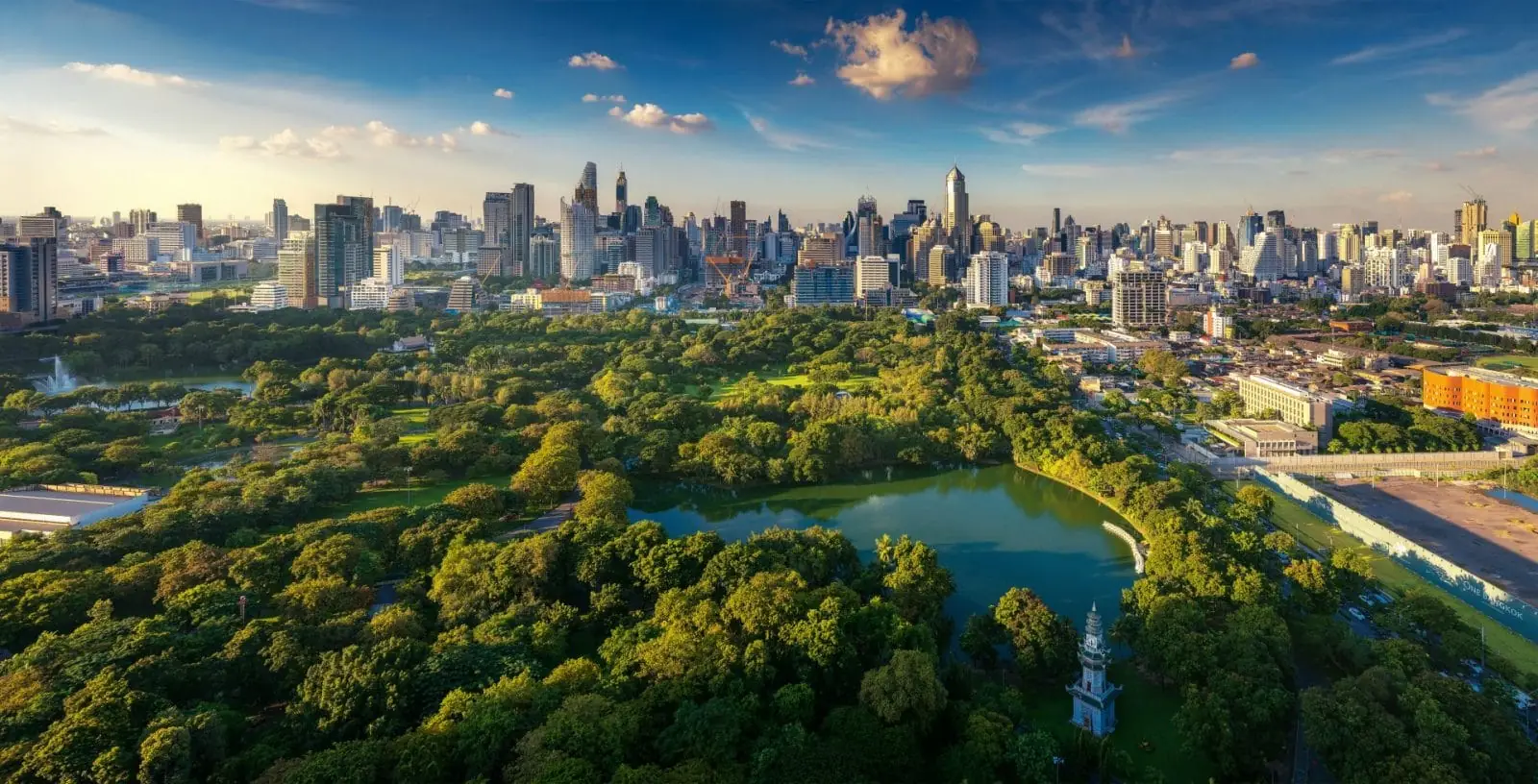
The phrase “luxury urban ecosystems usa” frequently appears in contemporary architectural journals, urban planning grants, and high-end real estate portfolios. However, the terminology often suffers from significant conceptual ambiguity. In casual discourse, people apply the label broadly to any high-rise balcony featuring potted plants, token green roofs, or corporate courtyards decorated with turfgrass. Consequently, this generalized usage obscures critical differences in structural engineering, ecological performance, and biological diversity.
A primary source of oversimplification is the assumption that high-end ecological installations operate simply as preserved nature relocated into a downtown core. In reality, an ecosystem embedded within a dense urban grid faces extreme environmental stress. High wind shear, intense solar radiation reflected off glass facades, severe soil compaction, and artificial microclimates complicate operations. Therefore, evaluating luxury urban ecosystems usa requires separating superficial cosmetic greening from deep ecological engineering, hydrological integration, and structural resilience.
Furthermore, popular assessments often ignore regional climatic divergence across the country. An ecological network engineered for the humid, temperate conditions of the Pacific Northwest fails under the extreme arid heat of the Southwest or the rigorous freeze-thaw cycles of the Midwest. True excellence in this field is entirely context-dependent. Designers must balance regional soil chemistry, climate resilience, and biological succession accordingly.
Deep Contextual Background
Early Urban Parks and Industrial Interventions
The lineage of integrated urban ecology in the United States evolved slowly out of nineteenth-century public park movements and early industrial sanitation reforms. Pioneers like Frederick Law Olmsted recognized that dense industrial cities required deliberate green infrastructure to manage stormwater and provide psychological relief for urban populations. These early public parks functioned as engineered drainage systems disguised as natural landscapes, establishing the foundational link between city planning and hydrology.
The Modern Ecological Shift
As modernist architecture and post-war suburban expansion reshaped American cities, the urban fabric grew increasingly fragmented and car-centric. However, the late twentieth century brought a growing ecological awakening. Industrial abandonment in cities like Chicago and New York left behind vast tracts of brownfield land, prompting planners to rethink how nature could re-enter the urban core. The contemporary renaissance of high-performance urban ecology accelerated in the 2000s, driven by advancements in green roof technology, stormwater modeling, and urban forestry science. Today, progressive cities integrate living infrastructure directly into master plans, climate adaptation frameworks, and zoning codes.
Conceptual Frameworks and Mental Models
Analyzing elite metropolitan ecological installations requires specialized mental models to account for the unique physics, biology, and sociology of city environments.
-
The Urban Metabolism Loop: This model evaluates how an ecosystem integrates local resource inputs—such as captured stormwater, greywater, and municipal compost—into biological output.
-
The Microclimatic Thermal Envelope: High-density architecture creates distinct thermal pockets. Designs must model solar reflection, wind turbulence, and ambient heat radiation to ensure plant survival.
-
The Biological Succession Horizon: This framework projects how plant communities mature over decades, ensuring pioneer species successfully transition into stable climax communities without artificial over-maintenance.
-
The Socio-Ecological Equity Matrix: This mental model measures how urban ecological installations impact neighborhood air quality, urban heat mitigation, and public spatial access.
Key Categories or Variations
High-end urban ecological installations across the United States span several distinct typologies defined by structural requirements and functional intent.
-
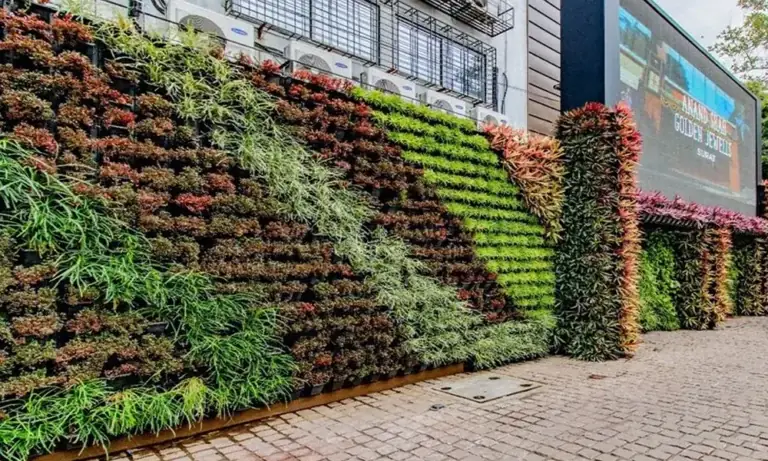
Integrated Biophilic Building Skins: Exterior living walls and cascading vertical vegetation integrated directly into high-rise commercial or residential facades.
-
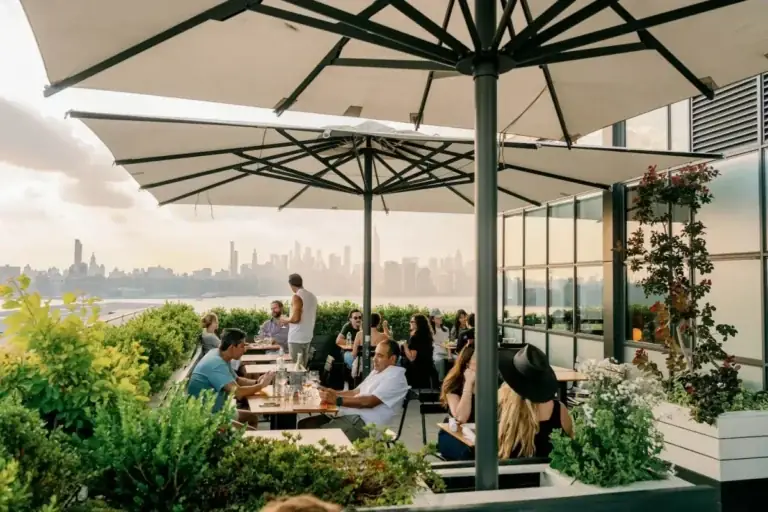
Elevated Eco-Podiums: Multi-acre residential amenity decks featuring native woodlands, stormwater biofiltration ponds, and intensive soil depths.
-
Adaptive Brownfield Restoration Parks: Industrial brownfield conversions engineered to remediate sub-surface toxins while providing public green space.
-
Rooftop Agricultural and Pollinator Sanctuaries: High-altitude installations combining food production with dedicated native pollinator nesting habitats.
-
Sub-Surface Water Retention Plazas: Hardscaped public plazas engineered above massive stormwater retention cisterns and root-zone aeration networks.
-
Vertical Forest Residential Towers: Multi-family high-rise developments featuring thousands of trees and shrubs cantilevered across private balconies.
| Typology | Typical Structural Load | Primary Ecological Focus | Maintenance Complexity | Spatial Footprint |
| Biophilic Building Skins | 15 to 40 lbs/sq ft | Thermal insulation, vertical biodiversity | High / Specialized | Vertical / Facade |
| Elevated Eco-Podiums | 100 to 300+ lbs/sq ft | Stormwater retention, microclimate cooling | High | Medium to Large |
| Brownfield Restoration Parks | Ground-supported | Soil remediation, regional habitat linkage | Moderate | Large (2 to 20+ acres) |
| Rooftop Pollinator Oases | 50 to 120 lbs/sq ft | Native insect conservation, urban apiculture | Moderate to High | Small to Medium |
| Vertical Forest Towers | 80 to 200 lbs/sq ft | Urban forestry, carbon sequestration | Very High | Building Footprint |
Realistic Decision Logic
Choosing among these typologies begins with an exhaustive structural and environmental site audit. If an existing building’s structural load limits are restricted, heavy podium landscapes are unfeasible, pushing designs toward lightweight living walls or modular green roofs. Conversely, new construction developments allow structural engineers to design high load capacities directly into concrete floor slabs, accommodating mature trees and deep soil beds.
Detailed Real-World Scenarios
A : The Chicago Industrial Brownfield Transformation
-
Context: A multi-acre abandoned rail yard along the Chicago River is converted into a high-performance public ecological park.
-
Constraints: Severe industrial heavy metal soil contamination, heavy surface runoff, and strict riverbank conservation setbacks.
-
Decision Points: Engineers implement phytoremediation planting programs alongside deep cap-and-isolate grading, routing site runoff through engineered bioswales before river discharge.
-
Failure Modes & Second-Order Effects: Unseasonable flooding saturates the bioswales, eroding newly planted root structures and requiring the installation of stabilization check-dams.
B : The Manhattan High-Rise Living Wall Retrofit
-
Context: A commercial skyscraper in Midtown Manhattan installs a multi-story exterior living wall to improve thermal efficiency.
-
Constraints: High wind shear at upper elevations, strict building facade access regulations, and freezing winter temperatures.
-
Decision Points: Design teams specify a closed-loop hydroponic panel system utilizing frost-hardy evergreen perennials and automated frost-drainage purge cycles.
-
Failure Modes & Second-Order Effects: A winter valve failure causes the irrigation lines to freeze and rupture within the wall assembly, requiring an emergency system redesign with heat-trace cabling.
C : The Seattle Commercial Podium Ecosystem
-
Context: A mixed-use tech campus in Seattle constructs a large shared podium deck featuring native Pacific Northwest forest flora.
-
Constraints: High regional rainfall volume, strict municipal stormwater detention limits, and limited sunlight due to surrounding high-rises.
-
Decision Points: Installers use specialized structural soils with high hydraulic conductivity and plant shade-tolerant understory ferns and vine maples.
-
Failure Modes & Second-Order Effects: Excessive shade prevents ground-cover establishment, leading to soil splash erosion during intense downpours and necessitating a supplemental mulch overlay.
D : The Austin Arid Urban Pocket Park
-
Context: A dense downtown commercial district in Austin develops a pocket ecosystem designed to mitigate extreme summer heat island spikes.
-
Constraints: Extreme summer solar radiation, severe water restrictions during droughts, and compacted urban fill soil.
-
Decision Points: Designers utilize deep root-zone aeration channels, drought-tolerant native Texas species, and sub-surface condensation harvesting cisterns.
-
Failure Modes & Second-Order Effects: Extended municipal water bans restrict supplemental watering, forcing a reliance on automated greywater recycling systems to prevent plant dieback.
Planning, Cost, and Resource Dynamics
Financial planning for elite urban ecological installations requires comprehensive analysis of direct capital expenditures, engineering studies, and long-term biological maintenance.
-
Direct Capital Expenditures: Engineered growing media, multi-ply root-barrier waterproofing, specimen plant material, automated drip telemetry, and structural retention systems represent primary upfront costs.
-
Indirect and Engineering Costs: Environmental site assessments, structural load calculations, wind-tunnel modeling, and municipal stormwater permitting account for substantial budget percentages.
-
Long-Term Operational Commitments: Ongoing budgets must account for specialized horticultural labor, pruning, soil nutrient replenishment, irrigation system servicing, and biological health monitoring.
| Project Phase | Estimated Budget Range | Key Cost Drivers |
| Environmental Engineering & Permits | $20,000 – $75,000+ | Phase II environmental audits, stormwater modeling, zoning reviews |
| Structural Waterproofing & Drainage | $30 – $80 per sq ft | Elastomeric membranes, root barriers, electronic leak detection |
| Engineered Soils & Substrates | $40 – $110 per cubic yard | Lightweight expanded shale, organic compost mixes, amendments |
| Planting & Horticultural Material | $25 – $90 per sq ft | Specimen trees, native perennials, pre-vegetated mats |
| Automation & Irrigation Systems | $15,000 – $70,000+ | Smart weather controllers, drip zones, moisture sensors |
Tools, Strategies, and Support Systems
Executing high-level urban ecological installations requires specialized technical tools and monitoring instruments distinct from traditional landscaping.
-
Electronic Leak Detection (ELD) Grids: Low-voltage testing grids installed beneath waterproofing membranes to pinpoint moisture breaches immediately.
-
Computational Fluid Dynamics (CFD) Software: Advanced modeling programs used to predict wind turbulence and microclimatic heat distribution around high-rise green installations.
-
IoT Soil Matric Potential Sensors: Wireless telemetry units buried in growing media to measure real-time water availability and prevent plant drought stress.
-
Phytoremediation Testing Kits: Analytical instruments used to track the biological breakdown of hydrocarbons and heavy metals in contaminated urban soils.
-
Multispectral Drone Imaging: Aerial cameras utilizing infrared sensors to evaluate plant health, canopy transpiration, and urban heat island mitigation performance.
-
Modular Hydroponic Panel Systems: Precision-engineered vertical frames designed to support root development and uniform nutrient delivery on building facades.
Risk Landscape and Failure Modes
Operating complex biological systems within a dense urban environment introduces severe risk factors where minor oversight triggers environmental or structural failure.
-
Sub-Surface Waterproofing Compromise: If roots breach protective membranes or water migrates past flashings, moisture seeps into structural concrete, causing internal steel corrosion.
-
Drainage System Occlusion: Accumulation of wind-blown debris, organic sediment, and root mass can block roof drains, causing catastrophic standing water loads.
-
Microclimatic Plant Desiccation: High wind shear combined with intense solar reflection strips moisture from plant leaves faster than roots can absorb it, leading to rapid dieback.
-
Biological Pest Outbreaks: Isolated urban ecosystems lack natural predator populations, making them vulnerable to rapid aphid, mite, or fungal epidemics if not actively managed.
-
Regulatory Non-Compliance on Stormwater: Failing to meet municipal detention discharge limits during severe rainstorms triggers municipal fines and legal penalties.
Governance, Maintenance, and Long-Term Adaptation
The Maintenance Lifecycle Framework
-
Weekly Operational Audits: Inspect irrigation flow rates, clear debris from primary drain basins, and test automated control telemetry.
-
Monthly Biological Reviews: Monitor plant canopy density, check for pest or disease outbreaks, and measure soil nutrient levels.
-
Bi-Annual Structural Inspections: Review waterproofing flashings, test electronic leak detection circuits, and inspect structural tree ties.
-
Annual Comprehensive Ecosystem Servicing: Apply organic compost top-dressing, prune structural tree canopies, and recalibrate irrigation weather stations.
Adjustment Triggers
Operational protocols must establish clear response thresholds. If soil sensors indicate chronic moisture stress despite active irrigation, immediate excavation and inspection of drip lines is mandatory. Furthermore, if multispectral drone imaging reveals declining canopy health across specific zones, soil amendment or biological pest control protocols must execute immediately.
Measurement, Tracking, and Evaluation
-
Leading Indicators: Soil organic matter accumulation, mycorrhizal fungal activity indices, sensor uptime percentages, and seedling establishment rates.
-
Lagging Indicators: Total annual stormwater volume retained on-site, local ambient temperature reduction averages, native bird and insect species diversity counts, and asset valuation appreciation.
-
Documentation Examples:
-
Hydrological Performance Logs: Record stormwater discharge volumes and retention times to verify compliance with municipal civil engineering codes.
-
Horticultural Health Registers: Track plant survival rates, soil testing results, and seasonal organic amendment applications.
-
Thermal Mitigation Reports: Document infrared surface temperature comparisons between green installations and surrounding asphalt zones.
-
Common Misconceptions and Oversimplifications
-
Myth 1: Urban ecosystems require zero maintenance once established. Correction: Living infrastructure embedded in artificial urban settings requires active, skilled stewardship to survive and perform.
-
Myth 2: Any roof or building facade can support heavy green installations. Correction: Structural load limits govern all installations; adding intensive soil and trees requires major engineering reinforcement.
-
Myth 3: Native plants do not require irrigation in cities. Correction: Urban heat island effects and restricted soil volumes cause city microclimates to dry out much faster than natural rural habitats.
-
Myth 4: Living walls function primarily as artistic decorations. Correction: Properly engineered green walls provide substantial thermal insulation, acoustic damping, and building energy savings.
-
Myth 5: Urban soil contamination can be ignored if plants are growing. Correction: Unmitigated toxic sub-surface soils pose long-term environmental hazards and can stunt root development if roots breach containment barriers.
-
Myth 6: Green infrastructure completely eliminates the need for stormwater sewers. Correction: While high-performance ecosystems drastically reduce peak runoff volumes, extreme weather events still require municipal overflow systems.
Ethical, Practical, and Contextual Considerations
The expansion of high-end urban ecological installations touches upon critical questions of environmental justice and municipal resource allocation. While luxury green roofs and biophilic towers enhance real estate values in affluent downtown cores, lower-income neighborhoods frequently lack basic green infrastructure and parks. Therefore, progressive urban planning must bridge this divide, ensuring that ecological engineering principles apply equitably across all metropolitan districts. Furthermore, lifecycle analyses must account for the embodied carbon of manufacturing specialized green building materials, ensuring that ecological installations provide genuine net-positive environmental benefits over their operational lifespan.
Conclusion
High-performance urban ecological installations represent a sophisticated synthesis of landscape architecture, civil engineering, and environmental science. Designing and maintaining these systems demands unyielding respect for the physical laws governing urban microclimates, structural load limits, and hydrological management. True mastery relies neither on transient marketing trends nor on superficial green aesthetics; it is achieved through rigorous planning, ecological sensitivity, and disciplined operational governance. As metropolitan centers navigate demographic expansion and environmental pressures, the standard for resilient urban development will increasingly rely on the thoughtful integration of living ecosystems into the urban fabric.