Best Urban Agriculture United States: Systems & Models
Urban density across North America places heavy structural stress on conventional food networks. Therefore, city planners must rethink how metropolitan environments produce consumable resources. Vacant lots and rooftops once viewed as economic liabilities now represent critical agricultural real estate. Transforming underutilized parcels into living productive ecosystems is a vital strategy for enhancing local food security and strengthening metropolitan resilience.
Evaluating the performance of metropolitan cultivation systems requires rigorous examination beyond superficial sustainability metrics. Proper assessments demand deep scrutiny of soil contamination profiles, municipal zoning frameworks, and supply chain logistics. Furthermore, operating a high-yield agricultural initiative within a dense urban core introduces complex socio-economic variables. Thus, projects must balance ecological assets against administrative burdens.
This article explores structural methodologies, production classifications, and long-term operational governance for top installations. By focusing on soil science and municipal integration, this guide provides an analytical reference for developers and planners seeking to understand elite food production within city limits.
Understanding “best urban agriculture united states”
The phrase “best urban agriculture united states” frequently surfaces in municipal policy documents and academic journals. However, the terminology often suffers from conceptual ambiguity. In everyday discourse, people apply the label indiscriminately to any community garden plot or commercial warehouse. Consequently, this generalized usage obscures fundamental distinctions in scale, regulatory zoning, and labor models.
A primary source of oversimplification is the assumption that high-performing food systems operate identically to rural agribusinesses. In reality, a farm operating within a dense urban core faces extreme spatial and legal constraints. Restricted sunlight and heavy metal soil contamination complicate operations. Therefore, evaluating the best urban agriculture united states requires separating token community greening initiatives from robust commercial food systems.
Furthermore, popular assessments often ignore regional structural divergence across the country. A production model engineered for the Pacific Northwest will face severe barriers in the Rust Belt. True excellence in this field is entirely context-dependent. Designers must balance local community needs and agronomic science accordingly.
Deep Contextual Background
Early Precedents and Crisis Response
The lineage of modern metropolitan food production draws deeply from historical precedents of crisis response. From late-nineteenth-century vacant lot programs to wartime Victory Gardens, urban cultivation emerged primarily as a survival mechanism. These early iterations relied on temporary access to vacant land and manual labor. However, they lacked formal institutional integration or permanent zoning protection.
The Contemporary Urban Farming Renaissance
The modern urban agriculture movement accelerated significantly during the late 1990s. Industrial abandonment in cities like Detroit and open-space policies in Portland catalyzed this growth. As manufacturing sectors collapsed, vast tracts of vacant land prompted residents to reclaim property for food security. Over the past two decades, advancements in controlled-environment agriculture have transformed these grassroots projects into sophisticated commercial enterprises. Today, progressive cities integrate urban farming directly into comprehensive master plans.
Conceptual Frameworks and Mental Models
Analyzing elite metropolitan agricultural installations requires specialized mental models to account for socio-spatial and biological constraints.
-
The Closed-Loop Urban Resource Metabolism Model: This model evaluates how sites integrate local waste streams into productive inputs.
-
The Spatial Yield-to-Land Cost Equilibrium: This framework balances high real estate values against crop revenue per square foot.
-
The Socio-Ecological Equity Matrix: This mental model measures how agricultural projects impact neighborhood food access and mitigate environmental toxins.
-
The Regulatory Friction Index: This model analyzes administrative barriers that dictate project feasibility.
Key Categories or Variations
Metropolitan agricultural systems across the United States span several distinct typologies defined by spatial constraints and technology intensity.
-
Ground-Level Vacant Lot Farms: Open-air soil-based operations established on cleared urban parcels.
-
Agrihood Developments: Master-planned residential communities structured around a central working farm.
-
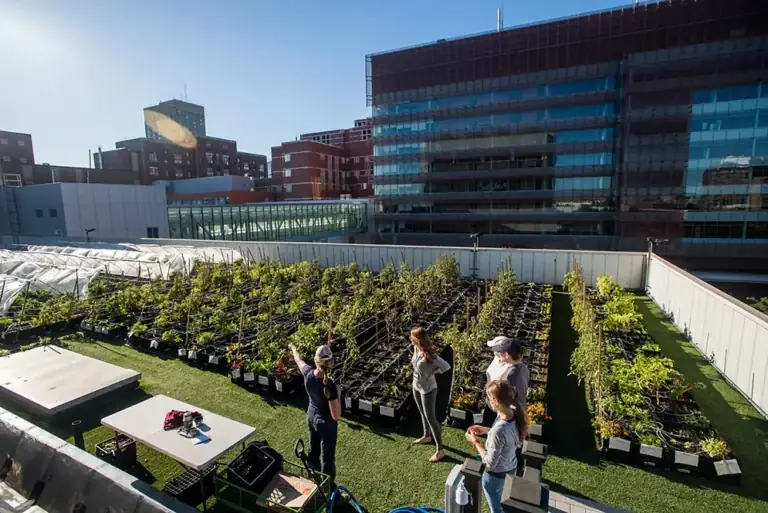
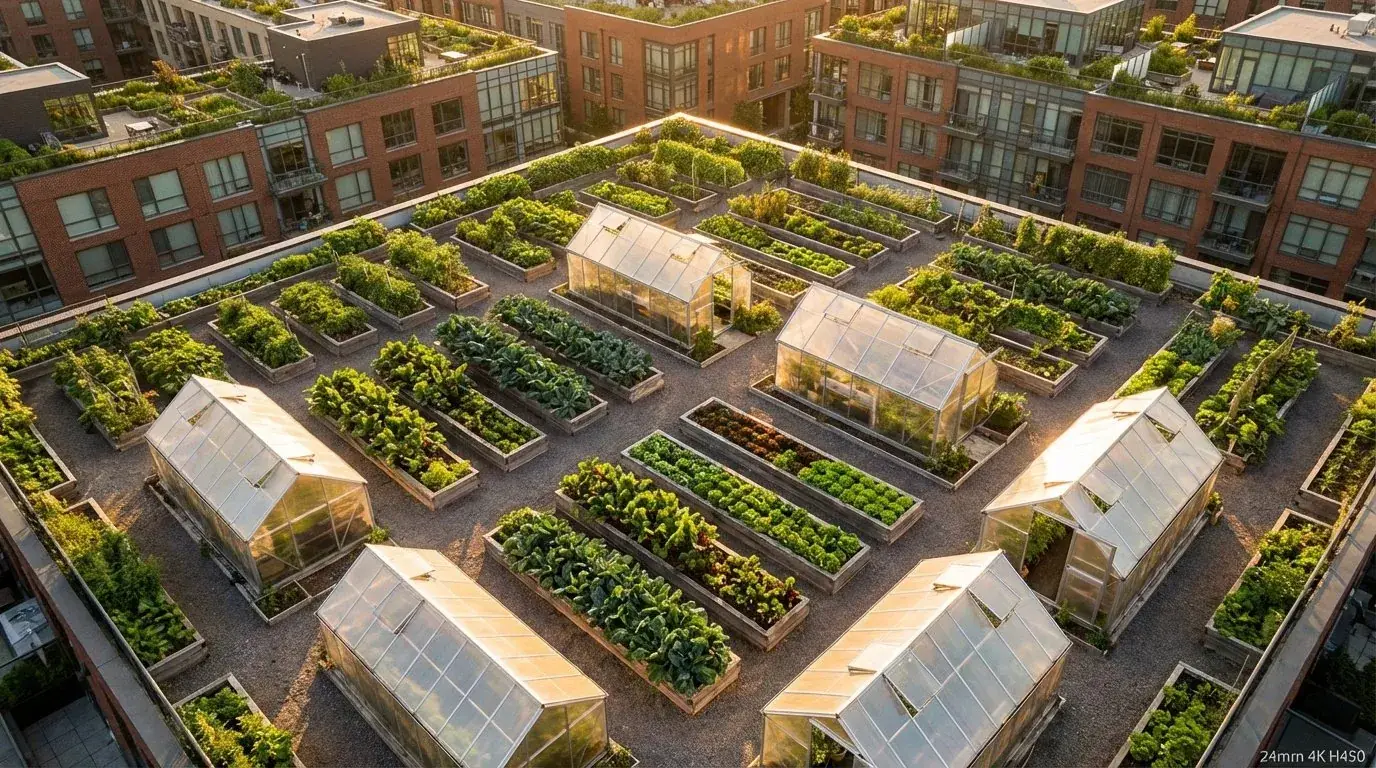
Rooftop Commercial Greenhouses: Advanced controlled-environment structures installed on industrial rooftops.
-
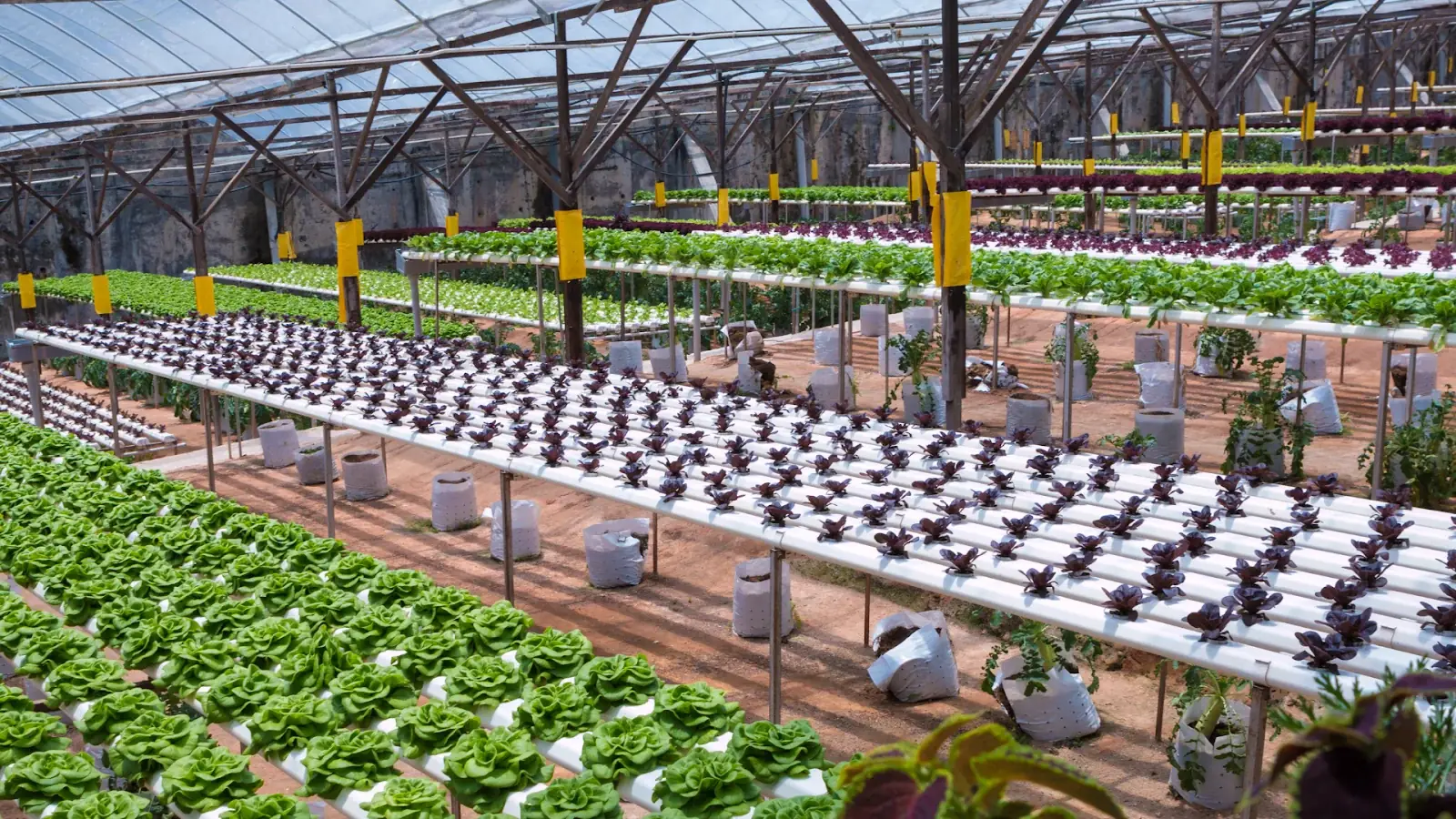
Indoor Vertical Hydroponic Facilities: Fully enclosed warehouse operations utilizing stacked vertical racks and LED lighting.
-
Community Garden Collectives: Decentralized parcel networks managed by neighborhood residents for civic engagement.
-
Aquaponic Systems: Integrated aquaculture setups where nutrient-rich fish wastewater fertilizes plant beds.
| Production Typology | Spatial Footprint | Technology Intensity | Primary Revenue Model | Labor Structure |
| Vacant Lot Farms | 0.5 to 5 acres | Low to Moderate | Farmers markets, CSA subscriptions | Volunteer and paid staff |
| Agrihood Developments | 2 to 15+ acres | Moderate | Real estate value integration, farm stands | Professional farm management |
| Rooftop Greenhouses | 5,000 to 50,000 sq ft | High | Wholesale restaurants, institutional buyers | Full-time skilled labor |
| Indoor Vertical Farms | 2,000 to 20,000 sq ft | Very High | Direct-to-retail grocery, high-end wholesale | Automated tech and operators |
| Community Gardens | 0.1 to 1 acre | Low | Membership dues, personal consumption | All-volunteer cooperative |
| Aquaponic Facilities | 1,000 to 15,000 sq ft | High | Dual-product sales (fish and produce) | Specialized technicians |
Realistic Decision Logic
Selecting an appropriate production typology begins with an analysis of land acquisition costs and zoning allowances. If real estate costs are prohibitively high, economic viability pushes projects toward indoor vertical farming. Conversely, where municipal land banks offer low-cost vacant parcels under supportive zoning, open-air farming provides a lower barrier to entry.
Detailed Real-World Scenarios
A : The Rust Belt Vacant Land Transformation
-
Context: A non-profit organization in Detroit seeks to convert an abandoned industrial block into a productive open-air farm.
-
Constraints: High levels of subsurface heavy metals and limited initial capital.
-
Decision Points: Organizers implement a zero-excavation raised-bed farming methodology utilizing certified organic compost.
-
Failure Modes & Second-Order Effects: Heavy spring rains saturate raised beds, causing localized nutrient leaching along paths, requiring permanent wood-chip swales.
B : The Pacific Northwest Municipal Policy Integration
-
Context: A commercial developer in Portland wants to integrate a rooftop farm into a mixed-use building.
-
Constraints: Strict structural dead-load limits and municipal stormwater management mandates.
-
Decision Points: The design team selects lightweight modular growing trays, routing excess runoff into sub-surface storage cisterns.
-
Failure Modes & Second-Order Effects: High winds at upper elevations cause rapid drying of media containers, forcing an upgrade to automated drip irrigation controllers.
C : The Arid Southwest Controlled-Environment Facility
-
Context: An agribusiness enterprise in Denver establishes an indoor hydroponic facility to supply local restaurants.
-
Constraints: High municipal water connection fees and intense summer cooling loads.
-
Decision Points: Operators install closed-loop water recirculation systems paired with solar offset agreements to manage energy costs.
-
Failure Modes & Second-Order Effects: A sudden grid power failure threatens crop survival before backup generators engage, prompting investment in battery storage.
D : The Coastal Mid-Atlantic Aquaponic Innovation
-
Context: A social enterprise in Baltimore launches an aquaponic food production center within an abandoned warehouse.
-
Constraints: Strict environmental health department regulations regarding wastewater discharge.
-
Decision Points: Engineers design a dual-stage biological filtration system that purifies aquaculture water before recirculation.
-
Failure Modes & Second-Order Effects: An imbalance in the biofilter causes ammonia spikes, requiring immediate reset protocols and specialized monitoring equipment.
Planning, Cost, and Resource Dynamics
Financial planning for elite metropolitan agricultural enterprises requires comprehensive accounting of capital expenditures and operational inputs.
-
Direct Capital Expenditures: Land acquisition, soil remediation, greenhouse structures, LED lighting arrays, and commercial irrigation infrastructure represent primary upfront costs.
-
Indirect and Engineering Expenses: Environmental site assessments, structural engineering reviews, and municipal permitting comprise substantial budget portions.
-
Long-Term Operational Commitments: Ongoing budgets must account for skilled labor wages, utility expenses, seed stock, and food safety audits.
| Project Phase | Estimated Budget Range | Key Cost Drivers |
| Site Assessment & Permitting | $10,000 – $45,000+ | Soil testing, phase environmental audits, zoning reviews |
| Infrastructure & Buildout | $50,000 – $500,000+ | Greenhouses, vertical racks, HVAC, LED lighting |
| Irrigation & Water Systems | $15,000 – $80,000+ | Backflow preventers, smart controllers, filtration |
| Soil & Growing Media | $5,000 – $30,000+ | Certified compost, organic amendments, raised bed frames |
| Annual Operations | $40,000 – $200,000+ | Labor, electricity, water, packaging, distribution |
Tools, Strategies, and Support Systems
Executing a high-performance urban agricultural enterprise requires specialized tools and engineering infrastructure distinct from rural farming.
-
X-Ray Fluorescence Analyzers: Handheld screening devices used during site assessments to detect heavy metal contamination profiles instantly.
-
IoT Soil Moisture Telemetry: Wireless sensor arrays embedded in growing beds to monitor water content in real time.
-
Controlled-Environment HVAC Automation: Industrial climate management systems regulate temperature and humidity to optimize plant transpiration.
-
Full-Spectrum Horticultural LED Arrays: Energy-efficient lighting fixtures engineered with custom spectral diodes to maximize photosynthetic photon flux density.
-
Modular Nutrient Film Channels: Specialized PVC channels designed for recirculating water and nutrient solutions past plant roots.
-
Sub-Surface Rainwater Harvesting Cisterns: Underground storage tanks that capture and filter urban roof runoff for agricultural irrigation.
Risk Landscape and Failure Modes
Operating an agricultural enterprise within a densely populated environment introduces severe risk factors where minor oversights trigger consequences.
-
Subsurface Contaminant Migration: If historic industrial pollutants migrate upward through soil disruption, crop contamination compromises public health.
-
Utility Interruption and Grid Vulnerability: Controlled-environment facilities rely entirely on continuous electricity; sudden grid failures can destroy crop yields.
-
Regulatory Non-Compliance: Operating outside municipal zoning permissions or health department codes triggers immediate cease-and-desist orders.
-
Vandalism and Property Trespassing: Open-air farms lacking secure perimeter fencing are vulnerable to equipment theft and crop destruction.
-
Supply Chain Bottlenecks: Relying exclusively on hyper-local restaurant sales leaves small urban farms exposed to hospitality shifts.
Governance, Maintenance, and Long-Term Adaptation
The Maintenance Lifecycle Framework
-
Daily Operational Monitoring: Check irrigation pressure, inspect HVAC logs, and verify nutrient pH levels.
-
Weekly Biological Assessments: Inspect crops for pest pressure and remove diseased plant tissue.
-
Monthly Facility Audits: Inspect backflow preventers, calibrate sensor arrays, and check perimeter security fencing.
-
Annual Soil and Water Testing: Conduct certified laboratory analyses of growing media to verify food safety compliance.
Adjustment Triggers
Operational protocols must establish clear response thresholds. If laboratory soil tests reveal contaminant migration into raised beds, immediate cessation of production in affected zones is mandatory. Furthermore, if water recirculation systems experience biological contamination, sterilization protocols must execute prior to restarting production.
Measurement, Tracking, and Evaluation
-
Leading Indicators: Soil organic matter accumulation, nutrient solution stability indices, and seedling germination rates.
-
Lagging Indicators: Total annual crop yield per square foot and municipal stormwater volume offset.
-
Documentation Examples:
-
Food Safety Logs: Track seed batches and sanitation logs to maintain Good Agricultural Practices certification.
-
Environmental Compliance Reports: Record water discharge metrics and soil testing certificates for municipal oversight.
-
Economic Performance Ledgers: Monitor input costs against wholesale revenues to evaluate business model viability.
-
Common Misconceptions and Oversimplifications
-
Myth 1: Urban agriculture can completely replace rural agriculture. Correction: While urban farming enhances local food security, staple commodity crops require acreage impossible to replicate within city limits.
-
Myth 2: Vacant urban land is ready for immediate food production. Correction: Decades of industrial pollution mean most urban soils require extensive testing and total isolation via raised beds.
-
Myth 3: Indoor vertical farming has zero environmental footprint. Correction: Massive energy consumption for LED lighting creates a heavy carbon footprint unless powered by renewable energy.
-
Myth 4: Community gardens require minimal management. Correction: Long-term success requires structured governance and consistent maintenance leadership to prevent abandonment.
-
Myth 5: Urban agriculture is primarily a hobby. Correction: Many commercial rooftop and vertical farms operate as profitable business models focusing on specialty crops.
-
Myth 6: Municipal zoning laws universally welcome urban farming. Correction: Outdated zoning codes classify agriculture strictly as rural, requiring complex variance applications.
Ethical, Practical, and Contextual Considerations
The rapid expansion of urban agricultural initiatives touches upon spatial justice and environmental equity. Historically marginalized neighborhoods often experience food apartheid alongside environmental pollution, making them prime targets for green gentrification where new agricultural amenities drive up property values. Therefore, urban agricultural planning must prioritize community-led land ownership and anti-displacement policies. Furthermore, lifecycle analyses must balance resource inputs of advanced farming against community health benefits to ensure genuine social value.
Conclusion
Metropolitan agricultural development across the United States represents a sophisticated synthesis of agronomic science and ecological engineering. Designing and operating these systems demands unyielding respect for physical constraints and economic realities. True mastery relies on rigorous planning, technological adaptation, and disciplined operational governance. As urban centers navigate environmental pressures, resilient metropolitan development will increasingly rely on the thoughtful integration of productive agricultural systems.