Top Urban Farming in America: Systems, Design & Practices
Metropolitan growth across the United States has fundamentally altered how society views food security and public space utilization. Urban areas once dominated by concrete now shift toward productive zones. Agriculture within the city is no longer merely a seasonal hobby trend. This activity has evolved into an alternative agrarian industry that supports local food supplies and improves urban ecosystems.
Evaluating urban farming practices, however, requires deep analysis. This activity cannot be judged solely by visual aesthetics or crop yield totals. Urban agriculture must navigate soil contamination, strict zoning regulations, and water use efficiency. Therefore, proper management requires a multidisciplinary approach involving agronomy, civil engineering, and public policy.
This article examines the engineering principles, model variations, economic dynamics, and long-term governance shaping modern urban agriculture landscapes in America. Through structural and operational analysis, this guide provides a comprehensive reference for urban planners, agricultural advocates, and developers seeking to understand the essence of farming in urban territories.
Understanding “Top Urban Farming in America”
The phrase “top urban farming in america” frequently appears in lifestyle publications and architectural media reports. However, the term often suffers from conceptual bias. In general conversation, people frequently conflate small-scale backyard gardens with high-tech commercial production facilities located inside urban warehouses.
A primary source of oversimplification is the assumption that all urban gardens share identical functions and economic impacts. In reality, a volunteer community garden serves a very different social purpose compared to a commercial vertical hydroponic farm. Therefore, understanding top urban farming in america demands a clear separation between community-driven initiatives and advanced industrial agribusiness models.
Furthermore, popular evaluations frequently overlook local climate and regulatory constraints. Agricultural practices succeeding in the wet, cool climate of the Pacific Northwest are not necessarily effective when applied to arid southwestern regions. True excellence in this field depends on the ability to adapt cultivation techniques to the environmental limitations where the farming takes place.
Deep Contextual Background
Early Roots of Urban Agriculture
The lineage of urban agriculture in America traces its roots to economic crises and past social movements. During World Wars I and II, the federal government promoted “Victory Gardens” campaigns to secure national food supplies. Citizens utilized yards, school grounds, and vacant lots to grow vegetables to reduce the strain on military logistics supply chains.
Evolution Toward Modern Agriculture
Entering the late twentieth century, urban farming movements shifted from mere survival efforts to environmental renewal strategies. Major cities like Detroit, Chicago, and New York began utilizing abandoned industrial brownfield sites to address vacant land and food insecurity issues.
Over the past two decades, technological developments changed this sector drastically. The integration of energy-efficient LED lighting, closed-loop hydroponic systems, and climate automation enabled large-scale food production inside enclosed structures without direct sunlight. This transformation establishes urban farming as a crucial pillar in future food security.
Conceptual Frameworks and Mental Models
In-depth analysis of urban farming requires specialized mental models to overcome space and resource limitations in dense environments.
-
The Space and Structure Load Equilibrium Model: This model emphasizes the importance of calculating building load capacities, especially when agricultural activities occur on rooftop structures or multi-tiered concrete decks.
-
The Closed Resource Circulation Model: Effective urban farming must minimize waste by recycling irrigation water and composting organic waste locally.
-
The Logistical Access and Distribution Model: Economic success relies heavily on the travel distance from production sites to final consumers to cut transportation costs and maintain product freshness.
-
The Zoning Compliance Regulation Model: This model accounts for municipal law limitations, water usage permits, and food safety standards applicable within local jurisdictions.
Key Categories or Variations
Urban farming systems in the United States encompass various typologies adapted to capital scale, technology, and geographic location.
-
Community Gardens: Shared plots managed by local residents for local food production and social interaction.
-
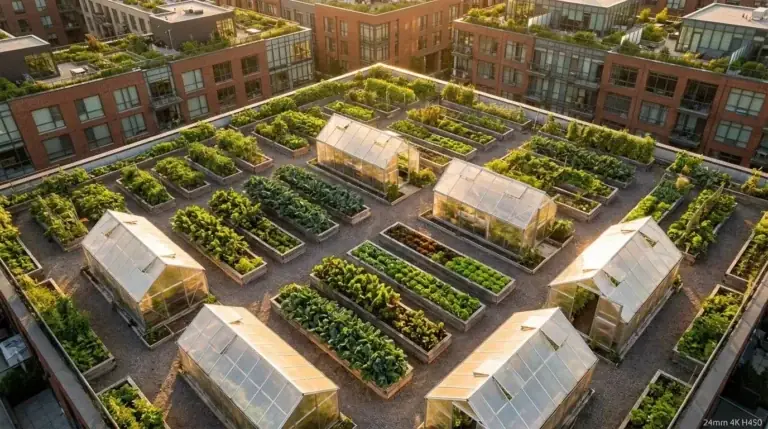
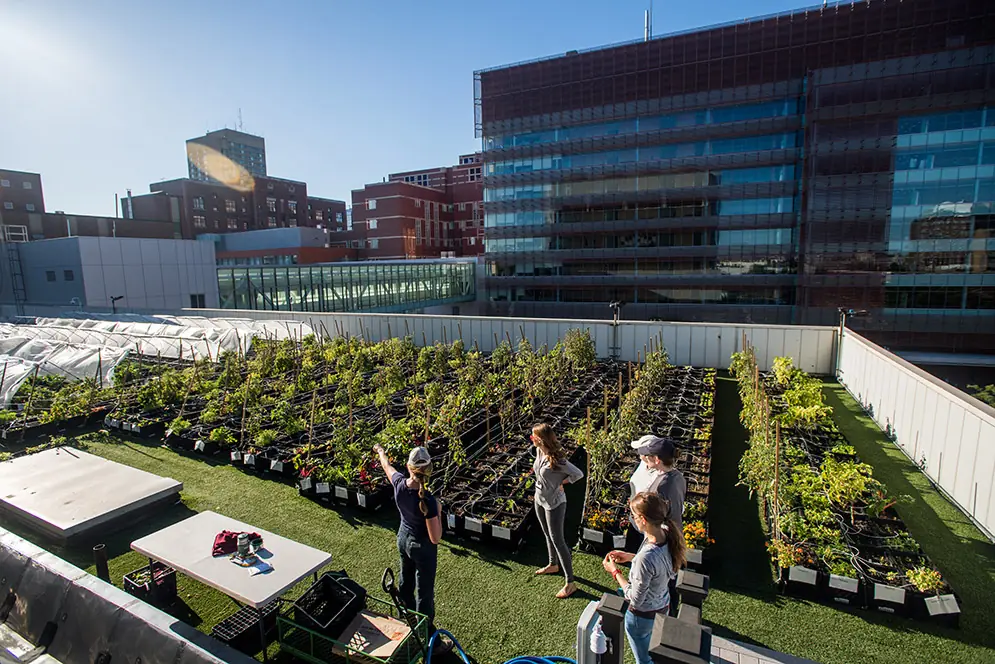
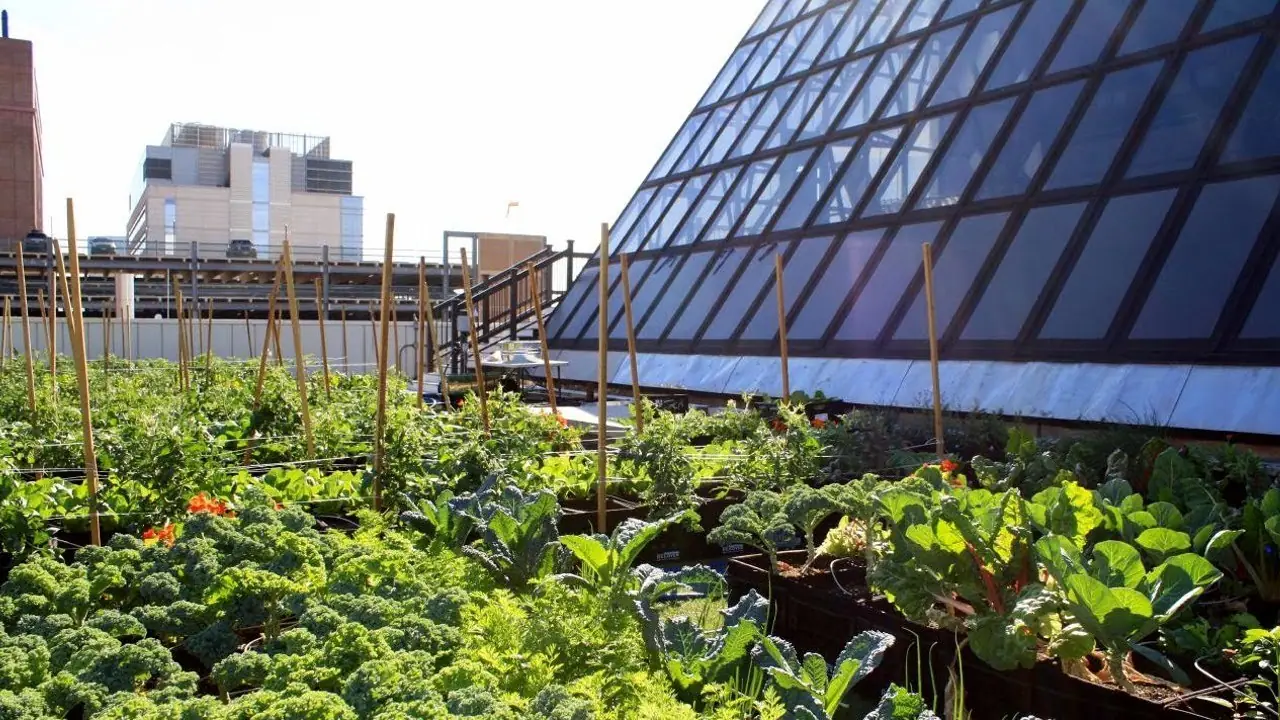
Rooftop Farming: The utilization of commercial or residential roof spaces using lightweight soil systems or hydroponics.
-
Indoor Vertical Farming: Enclosed multi-tiered facilities utilizing full artificial lighting and precise climate control.
-
Vacant Lot Agriculture: The utilization of former building sites or empty land in the city center for mid-scale production.
-
Urban Aquaponic Cultivation: Integrated systems combining fish farming and horticultural crops in a single water circuit.
-
Education and Research Gardens: Agricultural installations managed by academic institutions for agricultural technology innovation.
| System Typology | Capital Requirement | Space Efficiency | Contamination Risk | Technical Complexity |
| Community Gardens | Low | Medium | High (Soil) | Low |
| Rooftop Farming | High | High | Low | High |
| Indoor Vertical Farming | Very High | Maximum | Very Low | Very High |
| Vacant Lot Agriculture | Medium | Low | High | Medium |
| Urban Aquaponics | High | High | Low | High |
Practical Decision Logic
The selection of agricultural models must begin with an audit of capital feasibility and infrastructure availability. If budgets are tight, community gardens on vacant land represent the most rational option. Conversely, large-scale investments in indoor vertical facilities require strong market analysis to offset high energy operational costs.
Detailed Real-World Scenarios
A : Industrial Brownfield Conversion
-
Context: A local farming group in Detroit transforms an old factory site into a fresh vegetable production hub.
-
Constraints: Heavy metal contamination risks in industrial legacy soil and lack of water utility access.
-
Decision Points: Managers choose raised bed systems with clean growing media supplies from outside to avoid direct contact with native soil.
-
Second-Order Effects: Clean growing media procurement costs increase initial budgets, forcing managers to seek supplementary grants to maintain financial stability.
B : Commercial Hydroponics Facility in Office Buildings
-
Context: An agritech company leases a parking garage basement in Chicago for commercial lettuce production.
-
Constraints: High electricity consumption costs for artificial lighting and air circulation.
-
Decision Points: The engineering team optimizes plant growth LED light spectra and installs automated sensors to suppress energy waste.
-
Second-Order Effects: Energy efficiency is achieved, but total reliance on electrical supply demands expensive emergency generator backup systems.
C : Hospital Rooftop Farm
-
Context: A large healthcare facility in Boston builds a rooftop garden to supply organic vegetables to patients.
-
Constraints: Strict structural building load limits and rigorous medical sanitization hygiene rules.
-
Decision Points: Management applies lightweight modular hydroponic systems that do not overload the main concrete roof structure.
-
Second-Order Effects: The program successfully improves patient mental health, but requires dedicated maintenance teams understanding hospital sanitation standards.
Scenario D: Community Aquaponics in Dense Neighborhoods
-
Context: A resident initiative in Philadelphia builds a modular greenhouse-scale aquaponics system.
-
Constraints: Extreme temperature fluctuations between summer and winter and managing fish pond water quality.
-
Decision Points: Installation of double thermal insulation on greenhouse walls and digital automation for water pH monitoring.
-
Second-Order Effects: The system runs stably, but minor errors in fish feed calibration momentarily trigger sudden water quality drops.
Planning, Cost, and Resource Dynamics
Financial management in urban farming projects demands careful calculation between initial capital expenditures and long-term operational costs.
-
Capital Expenditures (CapEx): Includes purchases of irrigation systems, crop protection structures, specialized growing media, and automation technology.
-
Operational Costs (OpEx): Covers utility bills (electricity and water), seeds, plant nutrients, labor, and facility maintenance.
-
Investment Return Analysis: Although harvest sales profit margins are often thin, added values such as supply chain efficiency and environmental education provide high social returns.
| Cost Component | Budget Proportion Estimate | Primary Determinant Factors |
| Infrastructure & Technology | 40% – 60% | Automation, lighting systems, water pumps |
| Land Prep / Media | 15% – 25% | Planting bed construction, structural renovation |
| Utilities & Energy | 10% – 20% | HVAC electricity and lighting needs |
| Labor & Management | 15% – 30% | Agronomy expert salaries and farm operators |
Tools, Strategies, and Support Systems
Modern agricultural operations in urban areas require specific technological devices and management strategies.
-
IoT Moisture Monitoring Sensors: Wireless devices to measure soil moisture and nutrient levels in real-time.
-
Precision Water Filtration Systems: Filtering tools to remove chlorine and heavy metal contaminants from municipal water supplies.
-
Specialized Spectrum LED Light Panels: Artificial lighting designed to accelerate photosynthesis for indoor plants.
-
Farm Inventory Management Software: Digital applications to track planting schedules, watering routines, and harvest periods.
-
Rapid Composting Systems: Anaerobic organic waste processing units to convert plant residue into ready-to-use fertilizer quickly.
-
Modular UV Protection Structures: Adjustable protective canopies to shield plants from extreme solar exposure on rooftops.
Risk Landscape and Failure Modes
Failures in urban farming projects frequently stem from neglecting environmental factors and operational technicalities.
-
Heavy Metal Soil Contamination: Utilizing urban land without proper laboratory testing can lead to plant absorption of lead and cadmium.
-
Primary Utility System Failures: Sudden power outages in vertical farming facilities can halt water circulation and kill entire crop yields within hours.
-
Aggressive Pests and Crop Diseases: Warm urban environments often accelerate pest reproduction without balanced natural predators.
-
Regulatory and Permitting Conflicts: Zoning rule changes or land-use rights disputes can unilaterally halt garden operations.
Governance, Maintenance, and Long-Term Adaptation
Maintenance Lifecycle Framework
-
Weekly Inspections: Checking water pump functions, cleaning filters, and visually observing plant health.
-
Monthly Audits: Testing growing media nutrient levels, calibrating pH sensors, and evaluating pest attack rates.
-
Seasonal Evaluations: Reviewing cultivated plant varieties to match seasonal weather changes.
Operational Adjustment Triggers
Managers must establish action thresholds. If crop mortality rates exceed ten percent within a single cycle, nutrient formulas and watering schedules must be calibrated immediately.
Measurement, Tracking, and Evaluation
-
Leading Indicators: Water usage efficiency rates, nutrient solution pH stability, and vegetative growth consistency.
-
Lagging Indicators: Total harvest volume per square meter, local distribution carbon emission savings, and community satisfaction.
-
Documentation Examples:
-
Water Quality Testing Logs: Periodic records regarding acidity and mineral content of irrigation water.
-
Harvest Yield Reports: Data archives of quantity and quality for commodities shipped to local markets.
-
Energy Audit Records: Monthly electricity consumption recapitulations for indoor facility efficiency.
-
Common Misconceptions and Oversimplifications
-
Myth 1: Urban farming can completely replace rural agriculture. Correction: Urban farming functions as a local supplement and educational tool, while primary food supply relies on conventional rural farmland.
-
Myth 2: Growing crops in the city is always safe from pollution. Correction: Air pollution and road dust particles can accumulate on urban plant surfaces if not cleaned properly.
-
Myth 3: Rooftop gardens require no special maintenance. Correction: Rooftop gardens demand strict monitoring of drainage systems and building structural loads.
-
Myth 4: All automated hydroponic systems are eco-friendly. Correction: High electrical energy consumption in artificial lighting systems can enlarge carbon footprints if powered by fossil fuels.
-
Myth 5: Urban vacant lots are always free of legal disputes. Correction: Many vacant lots possess complex ownership statuses or special zoning rule encumbrances.
-
Myth 6: Vertical farming is very easy for beginners to run. Correction: Operating vertical facilities requires high-level technical expertise in biotechnology and systems engineering.
Conclusion
Urban farming in America represents a vital transformation in how cities view food security and environmental management. The success of these initiatives is not determined by temporary trends, but by precision engineering planning, regulatory compliance, and long-term operational discipline. As urban density increases, the future of local food security will rely heavily on smart integration between agrarian practices and urban infrastructure.